
Steve, an eager sales representative, approaches a potential customer in a retail electronics store. Excited to showcase his product knowledge, he steps closer and starts bombarding with his rehearsed pitch.
What Steve fails to notice is the customer’s folded arms, tightened jaw, and subtle step backward—classic signs of discomfort and disinterest. Instead of adjusting his approach or giving space, Steve keeps talking, inching forward to the customer with every sentence.
The result turns out to be more than just a failed sale; the customer leaves with a poor impression of both Steve and the brand he represented, potentially sharing a negative feedback with others.

This scenario plays out every day across various industries. Research consistently shows that sales conversations determine the majority of buying behavior.
A Forrester study found that 53% of purchase decisions are made based on the buyer’s perceived quality of sales conversations. Engagement Labs (with Koen Pauwels) in another study found that 19% of consumer sales are driven by offline and online social conversations.
But sales in 2025 is not just about communicating the same pitch over and over again. It goes beyond that! A poorly timed question, a misread facial expression, or a tone that sounds rushed by the salesperson can be enough to derail a promising interaction.
This is why for companies that rely on field sales, mastering the unspoken word is essential for success.
Why Frontline Reps Struggle with Non-verbal Cues from customers?
Frontline sales representatives often operate in high-pressure environments where they must quickly establish rapport and present value to the customers. They are expected to juggle product details, pricing information, and competitor insights—all while trying to create a personal connection.
Under these conditions, many of them tend to solely prioritize delivering information and often overlook a customer’s subtle reactions such as a shift in posture, or a tone that signals hesitation.
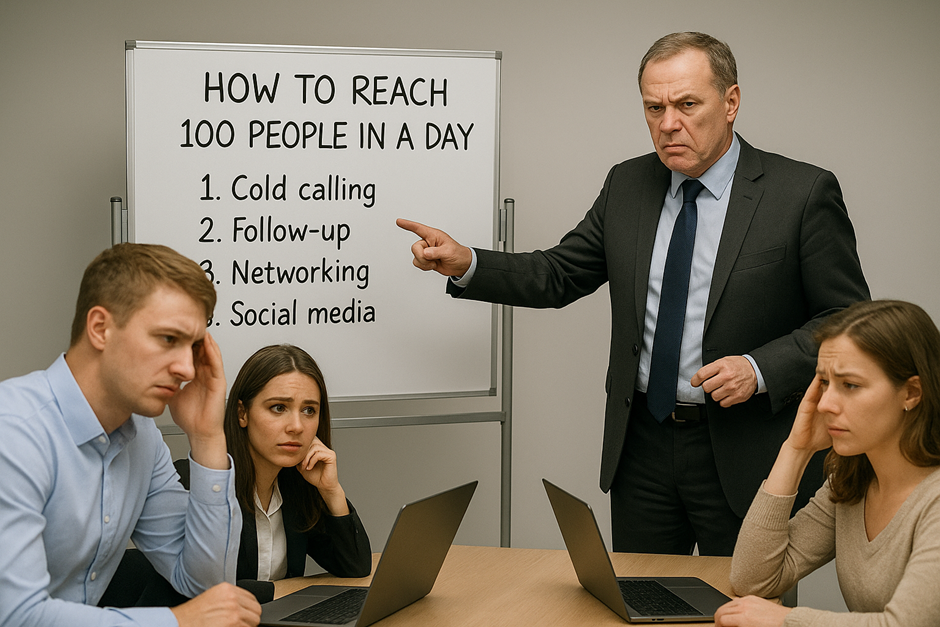
Steve’s experience isn’t unique. Traditional sales training programs often emphasize on what to say, but not how to listen or what to notice in a two-way communication. Like Steve, many reps simply are not trained to observe and interpret non-verbal cues in real time, leaving a critical skill gap.
An Ideal approach to solve
Bridging this gap requires more than a one-off workshop. Reps like Steve need repeated, realistic practice in identifying and responding to customer cues in a variety of real-world scenarios. This is where modern learning technologies, such as AI-powered conversational role-play comes into force.
By simulating live customer interactions, platforms like Master-O create a safe environment where salespeople can test different approaches, make mistakes, and receive instant feedback. The AI-powered platform can highlight not only the word choice but also tone, pacing, and the ability to adapt when the “customer” displays uncertainty or disinterest.
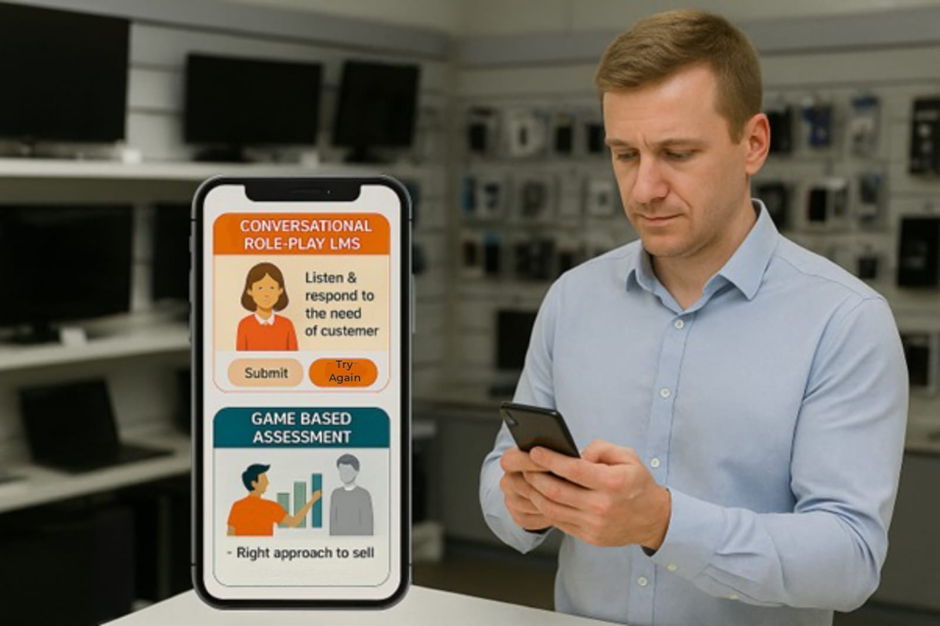
Game-based assessments further strengthen the process. When skill development is disguised as a challenge offering points for active listening or achieving a higher “rapport score”—reps stay engaged and motivated to improve.
Steve, for example, experiences higher work satisfaction when he earns badges for recognizing body language changes or responding with engaging answers when a virtual customer seems disinterested. Over time, these small daily learning Microskills® build confidence and make attention to verbal and non-verbal cues a second nature in the sales reps.
Overall impact on the Sales reps and conversational agility
Organizations that integrate such continuous and interactive trainings into their daily SOPs see measurable results in building frontline engagement. Reps become more apt at reading a prospect’s readiness to buy, identifying when to pause for questions, and recognizing subtle signs of agreement or resistance.
In our case, after several weeks of practice on Master-O, Steve’s sales approach changes noticeably. He now maintains an appropriate distance with the customer, matches his tone to their mood, and adjusts his pitch when he senses reluctance.
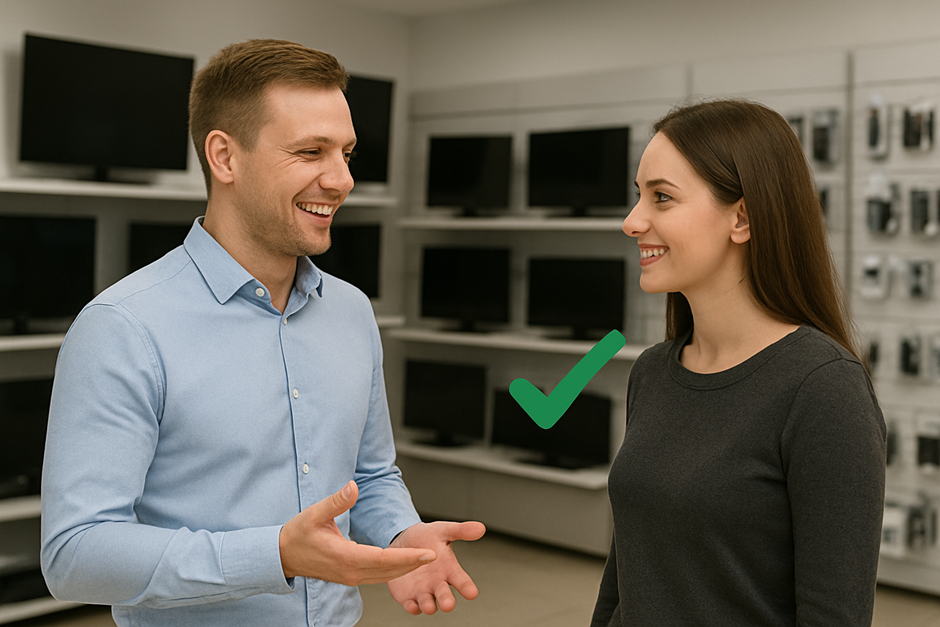
Conversations now feel more like two-way discussions than scripted presentations. Even Managers gain analytics on Steve’s progress, allowing them to track efficiently and celebrate his milestones on the leaderboard.
The Takeaway
Customer interactions are the lifeblood of every organization as every sales conversation carries the potential to win or lose a customer. Developing frontline teams to decode and respond to unspoken signals is no longer a “nice-to-have” skill but an essential to safeguard brand reputation. AI-driven role-play and gamified feedback make it practical to deliver this training at a large scale.
With experience across Auto, FMCG, Pharma, Banking, Insurance & Retail industries, Master-O has powered close to 4 Lakh frontline reps and generated 80% higher sales productivity, 39% more cross-sell, 70% faster go to market and 25% higher sales coverage for its multinational clientele.
It is a category leader on G2.com in the categories of:
· Microlearning,
· Sales Gamification,
· Sales Training and Onboarding
· Content Authoring.
If you and your organization are ready to elevate the quality of your sales conversations and unlock new levels of engagement, click below to know how Master-O can enable your frontline sales reps master the art and science of verbal and non-verbal communication.